A New Branch of Humanity
This article is meant to explore an aspect of the Morningstar Universe that sometimes gets overlooked: Humanity has not stopped evolving. Both with the benefit of ancient technologies and natural selection, there are now many different types of humans.
Just as Homo-sapiens emerged from a spectrum of different evolutionary cousins, “New Mankind” is now just one out of dozens of emergent subspecies, but it is they who determine what is truly human.
There are the blue-skinned, protandrian Epicineans that were biologically changed to survive heavy metal environments. The fair Arscolans with their fluted ears and whisker like eyebrows, possibly self-evolved humans seeking aesthetic appeal, or the Demenidians, provolved to be sycophantic to the point where their ancestors were pets to early spaceborn human civilizations. There are many, but generally all these branches are divided into two general groups: Grounders from planetary ecosystems and Orbiters, those adapted to live in space.
Enjoy!
~ Boman “Mr. Greebles” Modine
Orbiters
Humanity was never intended to live in space.
Orbiters are what became of those who refused to leave it.
Since Old Humanity’s earliest steps into the Black, entire populations have lived and died aboard starships, space stations, and vast artificial habitats by necessity and, eventually, by preference. The need to refuel and repair craft in order to get to the next world, the next water rich asteroid, the next star— all of it required the presence of the human hand to help in the vital expansion of the species. Across thousands of generations, these communities adapted biologically and culturally to environments where gravity would be considered a luxury, and where the atmosphere was something to be cherished on a spiritual level.
Initial chemical and medical therapies adapted individuals and then entire communities, but the inevitable degradation on the body would erode bone, weaken muscle, and even organs would breakdown from gradual radiation exposure. This obvious shortcoming was overcome through genengineering that could be sustained from parent to child.
This type of altered human is suspected to have originated around the initial colonization of the Cradleworlds, likely the direct reason such a diaspora could have occurred in the first place. They went by many names; the Free Peoples, the Unbound, but ‘Orbiters’ is the title they came to be known as.
Orbiters are the largest and most significant divergent population of near-humans (Numans) in Known Space. They are not a separate species, nor are they a single ethnicity. Most remain genetically compatible with one another and their Grounder cousins, allowing for procreation, blood transfusions and organ transplantation. What unites them is not a common appearance or place of origin, but a shared existence within the black.
Divergence
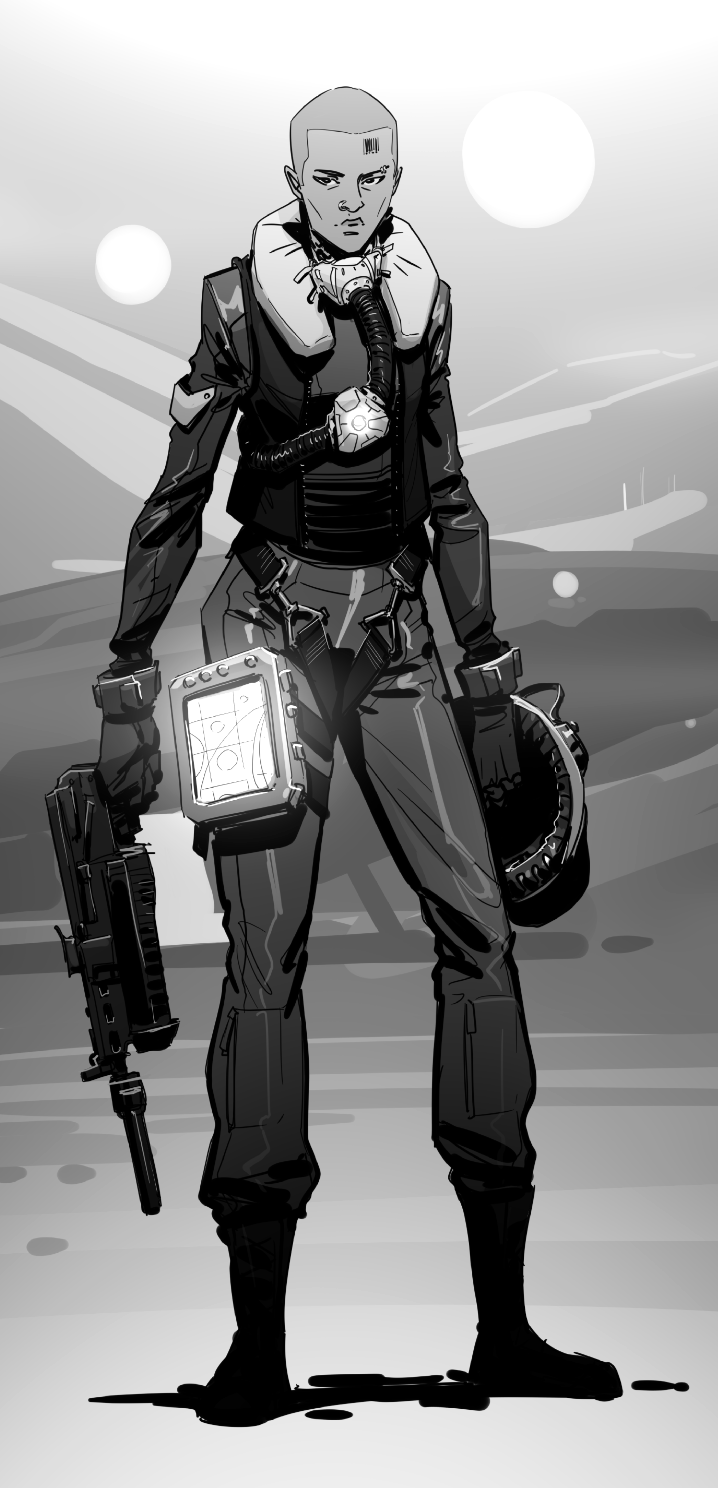
Orbiters are almost instantly distinguishable from Grounders by their longer limbs and seemingly frail forms. Their fingers and even toes can be longer and semi-prehensile, all the better to operate in the circulatory system of a starship or space station. Forced adaptations don’t end there and have, based on surviving records, slowly evolved naturally over time.
Orbiter bones are thinner, but were redesigned for pliability, the natural lattice compounded making them twice as likely to twist or, painfully, bend rather than break. Calcium loss is almost unheard of amongst Orbiters, whereas Grounders must heavily exercise when living in near-weightless environments for even just a few months.
The heart organ of Orbiters is enlarged, with a network of additional veins that lead to vascular reservoirs intended to redistribute blood during acceleration and deceleration, as well as sudden changes in gravity. The neck is noticeably broader, the upper chest as well, but often featuring a hollow which works in conjunction with larger lungs that can maintain a single breath for far longer than Grounder norms.
Orbiters are often nearly hairless, the obvious reason being their reliance upon space suits, almost like a second skin, while on Grounders, hair traps contaminating particles close to the body, as well as moisture. Orbiter skin tones range typically fall within a wide range, depending on the genepool’s relationship to the local star, but tends to have an undertone of gray as a result of a chemical known as selenomelanin, which absorbs ionizing radiation and neutralizes reactive compounds before it damages cells.
Rivalries
The earliest evidence of Orbiter populations indicate their emergence in the Kantaur system, with competing claims that Trappist has the oldest settlements. Orbiters are by no means united as a demographic, but they share a cultural kinship to Grounders in the Cradleworlds, which the Hegemon now refers to as the ExeCor.
It is likely these populations were installed in solitary outposts which slowly grew and, gradually, became nations in their own right.
There is a natural animosity that exists between Orbiters and Grounders. Such ethnocentric rivalries exist across all spectrums of humanity and stems from the natural psychological intertwining with Avarice. The ‘other’ is the competitor more plainly than a rival of the same ilk. However, anthropologists believe that the consistent myths and similar cultural touchstones throughout Known Space amongst Orbiter cultures has concluded that their shared ancestors were very much deemed subservient to planet-bound colonists or considered second-class, to put it lightly.
In such times, before the surety of contractual obligations and oversight, power was held by those with strength, power, and force. Orbiter stations could be snuffed out relatively easily by bombardment, and so, their vassalage continued for centuries into millennia.
But then, the Age of the Wandering, some seven thousand fiscal cycles before the opening of The Market, began. Hundreds of worlds were voluntarily abandoned and countless supermassive “Habit” craft were launched, flung into the Black. While it is unknown why this happened, and millennia later humanity would return in the form of the Aramax Coalition, increasing evidence points to many Orbiter bloodlines remaining unbroken in this time period. Unfortunately, much and more was lost about this time period, and the worldrings that would have survived these periods were ultimately destroyed in the Heritage Wars, the Duskward War, and through poor financial management by their caretakers, forcing their sale and subsequent scrapping. As a result, the details of this incredible lineage and the answers as to why some Orbiters never left the Cradleworlds, are lost to time.
A Thousand Adaptations
There is no single Orbiter form.
Generations spent in various degrees of gravity, regulated atmospheres, and often low-light environments have produced countless specialized adaptations. Hegemonic anthropologists have attempted to catalogue them, but surveys have not identified even half of the variations believed to exist throughout Known Space.
Common traits include frail or lightened bone structures, fair-to-white hair, heightened sensory sensitivity, and delicate immune systems. Many possess greater resistance to radiation exposure and an instinctive familiarity with changes in pressure, atmosphere, and artificial gravity. These adaptations make them exceptionally capable within ships and habitats, but vulnerable to the uncontrolled environments of planetary life.
Variation depends on the location and nature of their habitats, expressed more dramatically than Grounder diversity owing to the extremes of space habitation.
Worldrings
Enormous ring-shaped mega structures and the largest conventional orbital settlements in Known Space. Most surviving examples were inherited from earlier civilizations, as modern construction is considered prohibitively expensive and the knowledge of the ancient arcwrights has been lost.Generally, these constructs have large Grounder populations who migrate to them for better living conditions in their controlled and regulated environments. The Orbiters who are from worldrings, called Ringborn, still differ from Grounders but claim to be closer to the original “Edenic” physiology of Old humanity, which only creates more animosity.
Orbital Continents
Vast artificial constructs large enough to support enormous arcologies housing billions. These continent-scale constructs are locked into a synchronized orbit above a parent planet of similar gravity and sunlight. These are the preferred choice of megastructure project for Hegemonic nations, serving as preserves, especially in the case of planets being developed by industry.Populations of Orbiters are rare and are usually imported from other locations to work the outer regions that support the internal ecosystem.
Habitat Flotillas
Multiple ships, stations, and superstructures connected or operating together as one settlement. The Nephixians, an Orbiter people, originated from a flotilla of converted generation ships, while the Exile’s Crown in the Kantaur system consists of derelict vessels physically joined into one large habitat containing its own massive economy.Habitat Ships
Mobile or semi-mobile vessels designed to support permanent populations rather than simply transport them. They contain independent life-support, residential compartments, and sometimes agricultural ecosystems. Generation ships are the oldest and most culturally important examples.Orbiters would have been used most frequently here and in refuel stations, working for passengers in suspended animation or acting as caretakers for the ship.
Torus Stations
Rotating, toroidal stations that produce artificial gravity through spin. These Outsiders are called Torusans. These are the most common locations for Orbiter populations and their original ‘homeworlds’, to borrow a Grounder term.Conventional Space Stations
Permanent orbital settlements constructed to support tradelanes, industry, or local populations. These range from ancient independent communities to standardized Hegemonic installations.Habitat Platforms
Modular artificial environments built above hostile planets, mines, or industrial sites. A habitat platform provides pressure, atmosphere, utilities, and residential space without necessarily possessing the complete autonomy of a station.Depot and Refueling Stations
Commercial installations supplying MassTraders, FreeTraders, and other passing vessels. Mining regions may contain hundreds of them. Their populations consist primarily of handlers, techanics, and temporary commercial workers.These are the furthest from the norms of Orbiters, often with depleted bone mass and other mutations. It was from this further-flung stock that the Rurō creatures likely devolved from. No longer considered human, these migratory pests can often be found near these kinds of stations, and even worse, often appear to have some tenuous relationship with the human occupants.
The differences between Orbiter populations can be severe. Every vessel regulates gravity, light, atmosphere, temperature, and nutrition according to its own capabilities. A population shaped by an outer fringe mining habitat may differ considerably from one raised aboard an abundant worldring. Provolution, organoids, and deliberate genetic intervention complicate these distinctions further.
Five Hands Holistic Panceuticals as well as Wanvath Underwriting have warned that continued divergence may eventually divide Orbiters and Grounders into genuinely separate species. The Summit has dismissed these concerns, largely due to the continued existence of “Crossborn” offspring between many Orbiter and Grounder populations.
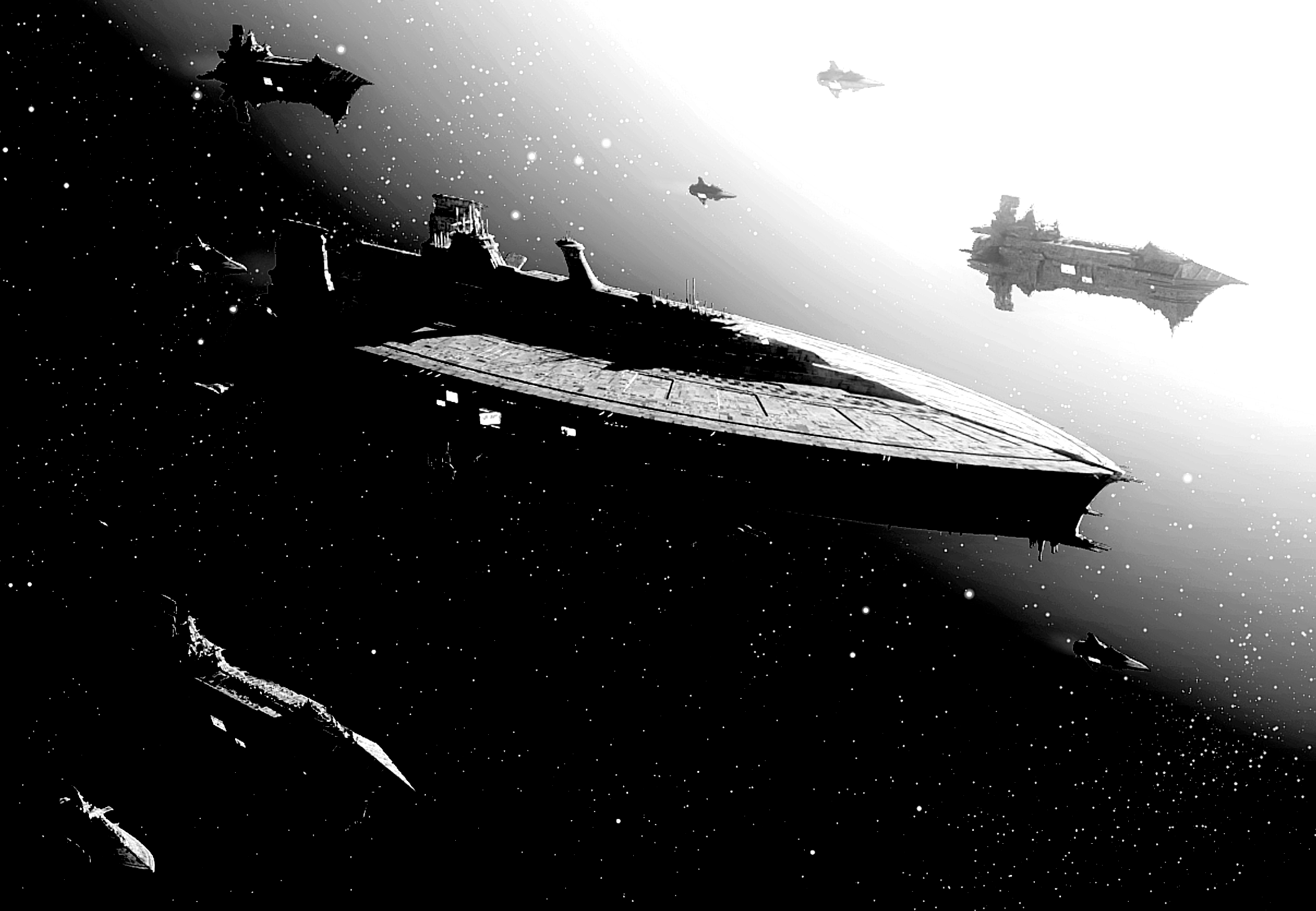
Artwork by Joazzz
This Ship Is Our World
Orbiter culture is founded upon a simple reality: aboard a starship, individual irresponsibility will lead to mistakes, and mistakes are death. Air, water, food, heat, and power are finite resources, no matter how much they can be recycled, and the unregulated waste of even a single breath can lead to catastrophic events that cascade through a population.
Every mouth places another demand upon the habitat and the community as a whole. Wastefulness is not considered a personal vice, but a direct threat to not just everyone aboard, but future unborn generations as well. Hoarding can be treated with the same severity Grounder cultures might reserve for murder.
Mutual reliance governs Orbiter life, even when resources are more abundant, like on a worldring. There are constant reminders of the fragility of life, which are hammered home by the extremes that even simple disasters can inflict upon daily life. Typically, those who live longest in such environments become the leaders, and most Orbiter communities are managed by councils of these elders who regulate resources as well as population growth.
The Lex as codified by the Founder of the Hegemon, and maintained by the Summit Council of Protea, grants Orbiter societies separate considerations that apply their community’s law onto visitors and immigrants to their stations, allowing individual habitats considerable freedom to administer themselves according to their own necessities.
To live in the Black is to treat these drifting motes as both cradle and coffin. The hull is the only horizon a community might ever see, while their own maintenance routines replace traditional Grounder seasons. Despite these hardships, Orbiters are generally tighter-knit, and broadly share the same series of pidgin languages that form a major part of trade between star systems.
Caeliners, the space equivalent of terrestrial ‘mariners,’ are often Orbiters, making up two-thirds of the entire Directorate Armada that protects the Hegemon from interstellar threats. Whatever animosity that remains between the two major branches of humanity no longer dictates the absolute need the Thousand Empires has for all its Consumers.
Notable Orbiter Peoples
Each world eventually produces an adaptive human population. Deviation is monitored and, in the modern age, curbed by the Audit. Amongst the Orbiters, their own divergence was initially controlled and by design, but has since branched out. Skeptics say that one day there will be a reckoning where New Mankind might not recognize itself, however, this concern is largely waived by the Commission, the Audit, and the Summit Council.
Azakarians
The blue-skinned epicineans of Azakar are some of the most obvious deviations from human norms in Known Space. Altered to withstand the ore-laden atmosphere of a supermassive gas giant, these Orbiters live aboard several orbital continents and thousands of smaller habitats. They are one of the largest Orbiter nations.
Setakans
Believed to have been the first provolved human species for the Outside by the Auronauts. Their unihemispheric [REDACTED] however, due to the war between both factions [REDACTED] the MassTrader Union.
Mkklonites
An Edenic branch of humanity that possibly evolved by themselves to live in space. These stooped, loose-skinned beings are instantly recognizable, more nightmare than human. They have minimal colonies beyond Protea, but have begun expanding since the proliferation of velanite, which threatens their status as energy brokers.
The Manual and the Orbiter Problem
Orbiter society presented an ideological problem for Dumno-Ualos, the Founder of the Hegemon. His theory of Stellarization elevated individual Avarice as the force that drove human progress, yet Orbiter communities survived by restraining individual consumption and taking a more collective perspective. Personal accumulation meant little aboard a vessel where everything from drinking water to living space belonged to an interdependent system. The Orbiter who hoarded resources was not successful. They were dangerous.
Orbiter societies were inherently spiritual, to such a degree as to be somewhat off-putting to even the more religious Grounder cultures. Having core hunches and “feelings” in relation to inanimate objects or the nature of the universe was intertwined with every action executed on a ship or station. Indeed, these vessels were alive, and the beings aboard them more akin to cells or blood flowing through their veins.
In a growing society that needed space travel to expand, this panoramic belief consistently rankled the materialist macro-culture forming in the newly minted ExeCor.
Dumno-Ualos, in his unique wisdom, recognized that Orbiters still possessed Avarice, but expressed it collectively, which likely led to his further treatise on mutual greed as a means to evolutionary supremacy. Families competed against families and ships against ships, accumulating capacity and a habitat’s performance, rather than luxuries that were worthless in environments that could fail at any time.
The Second Edition of the Manual was written in part to bring the Orbiters into the Hegemon’s fiscal philosophy. Their desire to explore was rebranded as the need for expansion. Their need to improve their vessels became the same value as an investment, rather than anything generationally spiritual. Communal survival became a corporate enterprise, while Orbiter nations were aligned with the same legal protections of a Joint Venture.
This new perspective helped bring the Hegemon tightly together and subdue the broader animosities. Orbiters did not serve the needs of Grounders, but benefitted from the services they provided, while Grounders realized there was no fundamental difference between the two major races of New Mankind.
Language Without Air
At the center of Orbiter identity is a shared limb-signal language developed for use inside the sealed vacuum suits they almost constantly wear. Complex gestures tied to the clipped pidgin and older creole-lang linguistic families form an Outsider pillar.
Every ship develops its own dialects and gestures, but has root elements that stem from an original station or ship or fleet, which remains as part of the essence of the individual language. Orbiter populations often move as a result of diversifying a gene pool, overpopulation, or the necessity of spreading technical knowledge to other communities, and so it is this sign language that can trace the origins of a bloodline.
This language has also influenced Orbiter art. Ritual dances are performed within observation blisters, where the participants use microgravity to move through configurations impossible within a gravity well. Grounders often regard Orbiter performers as extraordinary dancers with little understanding of what is being communicated.
Faith Within the Hull
Religio-subscriptions among Orbiters frequently center upon the systems that preserve life. As a part of Dumno-Ualos’ need for unity, he formalized all Orbiter faiths as acceptable within the tenets of the Choice, a Consumer’s ultimate right before all others. This was done despite the outcry of the Trappist Pontiffs that had long condemned Orbiter faiths as witchcraft and paganism. A rare public denouncement of this decision by the Founder of the Pontiff Trinity resulted in several tariffs implemented by the Summit Council, and mass vows of poverty amongst the religio-subscriptions. Both of these acts resulted in a brief recession but, gradually, the Trinity acquiesced.
Any who traverse the Black are superstitious. Space is anathema to life and almost every aspect of the vastness of the void is, in its own way, trying to kill you. The fabled Directorate saying “Chance Takes, Luck Gives,” in many ways captures the essence of Orbiter ‘spiritualism.’ The ship’s entire existence is considered something that is alive and governed by the invisible forces of the universe. The thoughts, intentions, and memetic output of the crew influence its journey and tempting dangerous thoughts, to the Orbiter, literally invites them aboard.
Whistling: Considered a challenge to the atmospheric generator (scrubbers) by wasting air.
Renaming ships: Not to be done without a formal ritual that typically involves venting the entire ship and performing an orbit around a star to purge old spirits and the echoes of bad mistakes.
Saying “Barakan”: Saying the word aboard a vessel, especially if in the Outside, is rumored to bring the Barakan to you.
This and hundreds of other cultural quirks follow Outsider populations, but, in the last nine centuries, many of the Trappist religio-subscriptions have slowly entered into their cultures as well.
Many subscribe to the Square, one of the three primary religios of Trappist, replacing its traditional points with the four essential aspects of the ship: Navigation, Air, Crew, and Bounty. Oxygen gardens and liquid recyclers may be treated as sacred spaces for the products they produce. Maintenance in and of itself becomes an act of reverence, joining spiritual responsibility with the practical preservation of the community.
Education and Labor
Orbiter education begins as soon as a child can grasp a tool. Labor is always in demand aboard a station and, like much of New Mankind, ergoid and synthan labor units are kept to a strict minority. Human hands must do the work if any value is to be derived.
Children learn pressure-seal maintenance, suit inspections, and hull-integrity checks before many Grounders learn to even read. Stellargraphy, mechanical repair, and the long history of dealings with other Orbiter communities are matters of survival rather than specialized study, and are taught with the same gravity with which a Grounder might learn to fear fire, lightning, or an avalanche.
Many Orbiter children do not learn to walk until adolescence. In microgravity, pulling, pushing, and controlling momentum are more useful than standing upright. Their bodies and instincts develop around three-dimensional movement, making them appear extraordinarily graceful in their own environments, yet physically uncertain under sustained planetary gravity. Many are forced to don body frames and auto-harnesses while in true gravity in order to function, and they wear these with the same familiarity as their space suits.
This upbringing gives Orbiters a generational advantage as caeliners, of which they make up the vast majority of in the Hegemon’s CorpoSoci, despite the much smaller Orbiter-to-Grounder-population. This does not keep Grounders from becoming able caeliners. In fact, many of the most famous stellar explorers have been of Grounder stock, but none can deny the simple benefits of being born to spaceflight compared to those who yearn for it.
The Orbiter Peoples Through the Ages
Auronauts and FreeTraders
The Auronauts were the first captains to pierce the Outside and benefit from faster-than-light travel. Almost nothing is known of these “space peoples” that could circumnavigate the physical realm and seemingly reappear as they willed. They are assumed to have been part of the Urian or Edenic populations that would have originated on Old Humanity’s actual home world, but this is more supposition then any concrete fact.
What is known is that the Auronauts did not colonize, but spent their time exploring, and sometimes plundering, the descendants of the Equestrian migrations of the Hegira Prima millennia earlier. It was they that mapped the leylines and formed the first navigational rutters that would become the cornerstone of stellar navigation in Known Space. Through their work the emergence of the Solarian civilization pressed outward into a diaspora, competing for every world with a tolerant biosphere. This pushed larger and larger populations to live aboard artificial habitats, or remain on their vessels longer than expected.
This conflict would eventually culminate into the Downfall Wars, but before, there there was a time of desperate cooperation amongst these non-terrestrial societies. While wars for land intensified, a true culture emerged that was tied with these populations’ gradual provolvement.
Old Humanity struggled greatly in this time as they clutched for distant stars. The Auronauts were the means to which trade, communication, and culture remained strong between the Cradleworlds, and their myths and voyages show how they helped transform the unknown into the future heart of a vast human territory. Because of them, the technologies to change humans was relatively uniform, at least in most cases.
The most successful Auronaut coalitions eventually became the MassTrader Union, which consolidated control over interstellar navigation and eliminated much of its competition. The MassTraders themselves, of course, were not without their own adaptations and [REDACTED] that double standard persists even today.
Ringborne
Ringborne are Orbiters who live aboard the few worldrings that remain in Known Space. Built before and during the Aramaxian Supremacy, the practice has been deemed too expensive by the Hegemon, which has done little more that refurbish these existing megastructures in space.
Worldrings are some of the oldest continually inhabited sites in Known Space and the Orbiters who have lived on them have retained more characteristics of Old Humanity, despite technically deviating. Appearance-wise, they are robust, tall, and with a vitality that has created countless celebrities, to the point where Hegemon beauty standards are often based on this minority population. This is because, within a worldring, the air and water is entirely regulated to maintain purity on the entire station, through the sacrifice of heavy industry and population numbers, should it come to it.
Ringborne society is broadly divided between Ringsiders and Arclanders. Ringsiders maintain the outer shell, often without gravity, and inhabit its enclosed or subterranean levels. They are stereotyped as laborers who preserve the traditional Orbiter values of self-reliance and generational maintenance.
Arclanders inhabit the interior ring, which is often considered a paradise. They are associated with sophistication, wealth, and entitlement and are often privileged by their proximity to the Patron class of the CorpoSoci. Although both groups inhabit the same megastructure, they may experience it as completely different worlds.
Torusans
Torusans inhabit the countless stations and outposts supporting the Hegemon’s tradelanes, which range from smaller refueling depots to the various forts around leyline entry points into the Outside. Many are or descend from Grounders who were modified through organoids or bionetics, rather than provolvement, to survive living in the Black.
Hereditary Orbiters frequently regard Torusans as intruders who have adopted the appearance of Orbiter life without earning its culture. This appeal to purity is an old one, but the same animosity that Outsiders and Grounders inflict on one another does not mean that either race is free from a plethora of their own internal prejudices. Even Torusan communities that have inhabited the Black for multiple generations are stereotyped as “rustic provincials”, the Orbiter equivalent of inhabitants from an isolated rural world.
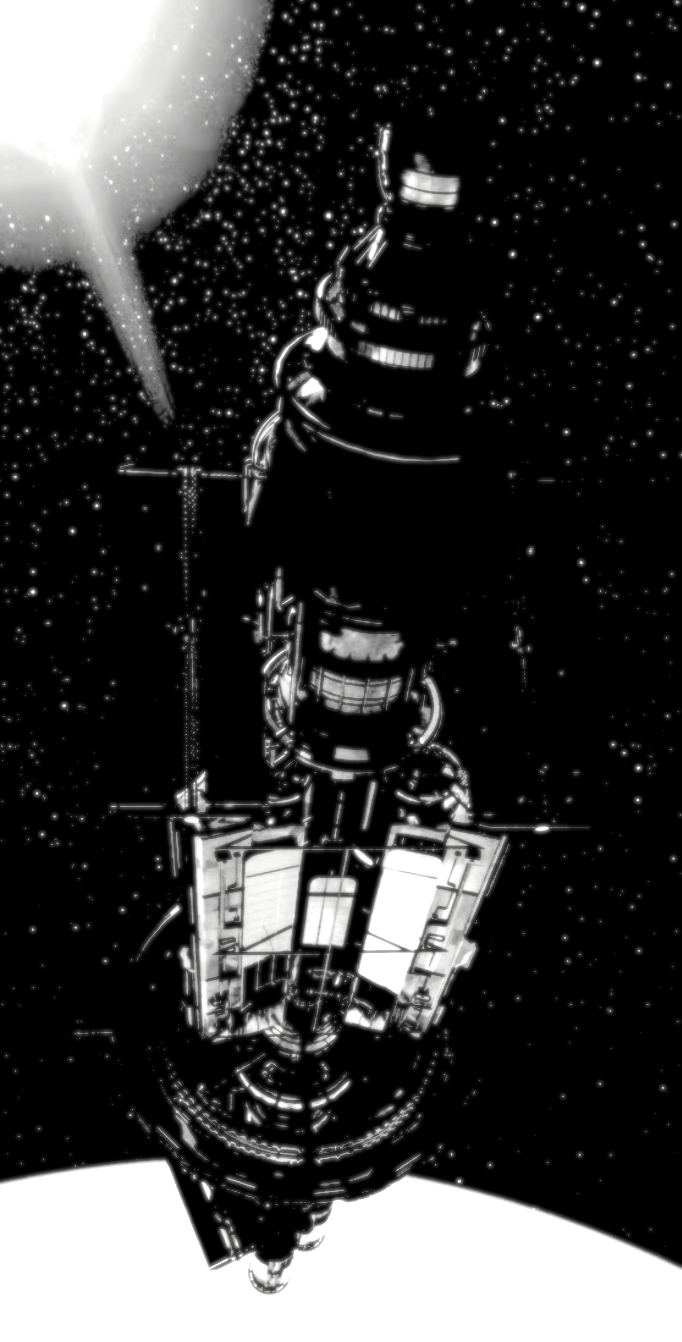
Their exclusion demonstrates that Orbiter identity is not determined by biology alone. One may be born in space and still not be accepted as belonging to it.
Grounders and Orbiters
Animosity between Grounders and Orbiters predates the Hegemon.
Grounders often see Orbiters as physically frail, insular, and culturally severe with a flair for dramatics. Orbiters regard Grounders as wasteful, clumsy, and psychologically dependent on abundance. Each considers the other poorly adapted to conditions they mistake for normality.
This hostility is not confined to private prejudice. Beginning around 8/62, the commercial rivalry between the Colarisᵗᴮ and Hydris beverage Corpos transformed cultural resentment into a full-on brand war. Colaris dominated the ExeCor, while Hydris was so popular among Orbiters that it had become nearly as essential as water or air aboard some ships.
Recordings of Consumers praising one product and desecrating the other spread through quickships and local intranets. Protests became sectarian clashes, with the brands inheriting millennia of inter-cultural strife. Even amongst the Directorate, the Tributary Regiments of the Army literally fought with caeliners of the Armada.
The Audit finally intervened before the brand war became an actual civil war. In order to do so, came the unusual deployment of Barakan of the 0-1 Division at the instruction of the Summit Council itself. One hundred of these ‘predators of predators’ were deployed to the Hydris executive offices in the Protean system, which were utterly destroyed with no survivors.
With the use of Barakan there was no gloating, only the acceptance that a choice had been made. Marginal protest in the Midworlds and the Frontier was tolerated up to a point but, by and large, the Orbiters quietly accepted the end of the brand war. Hydris survives now through darkmarket production and shadowCorp copies and these off-brands are often commonplace in Orbiter communities.
Need, Want, Have.
The Hegemon remains a civilization of planets governed by those who cannot function without people who live between them. Travel is so costly that any way to ease the journey of vital freightliners is a fortune worth paying.
Orbiters crew those freightliners, carrying food to worlds incapable of feeding themselves. They generationally maintain the stations as well as the orbital infrastructure upon which planetary industry depends. They serve in the Armada, and they allow for the limits of Known Space to be expanded.
Orbiters inhabit the narrow space between indispensability and estrangement by the majority of New Mankind. Their bodies preserve the history of humanity’s escape into space, while their ships carry the wealth that keeps the Thousand Empires alive. Grounders may govern the Hegemon, but every world beneath them remains dependent upon those willing to cross the black.
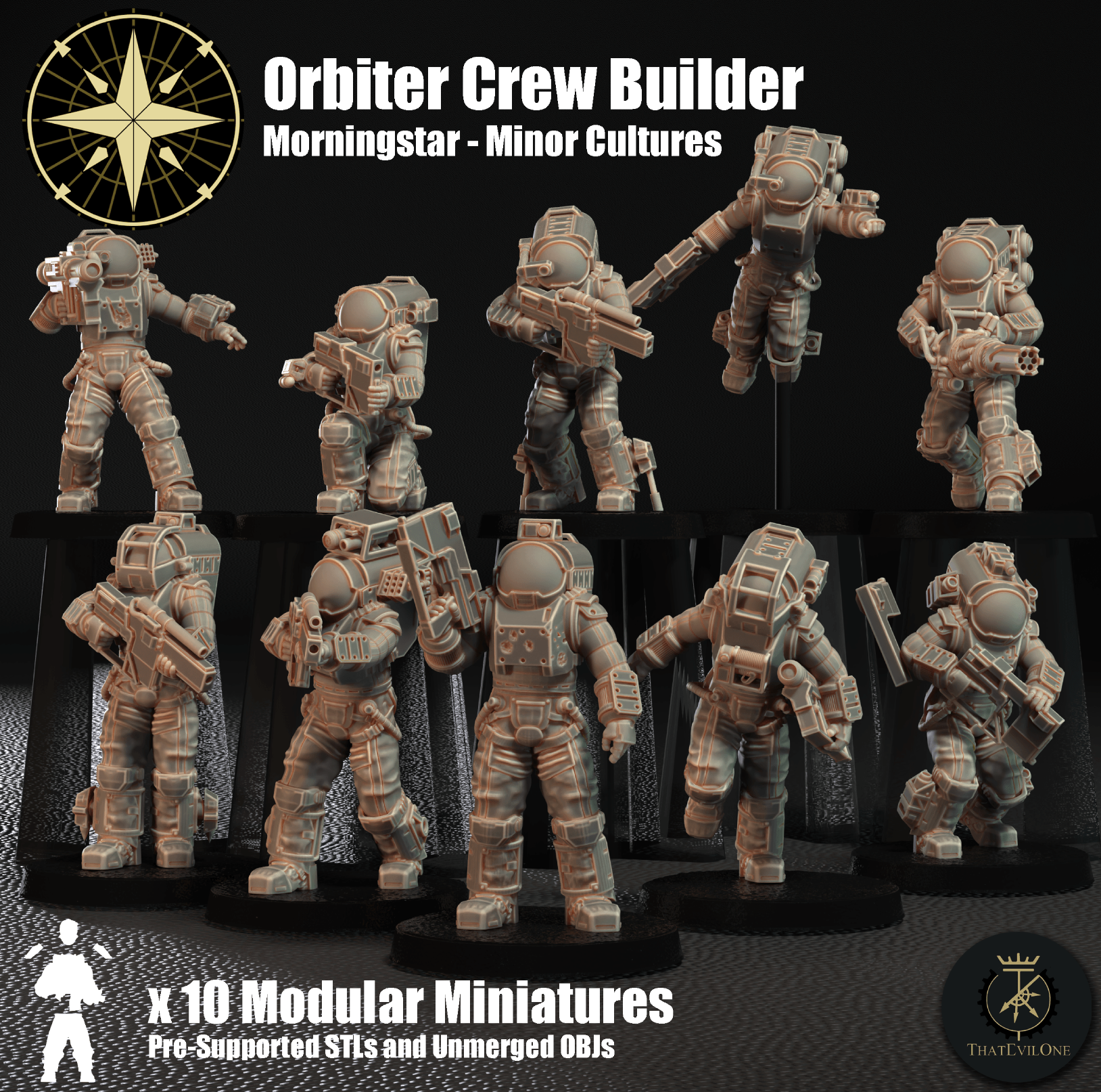
Remember! You can get our upcoming Orbiter miniatures by supporting us on our Patreon, where we release one new miniature kit as STLs to our supporters every month!
https://www.patreon.com/c/morningstarproject