
Muscle and Memory
The Yahow are a playable race of humans in our upcoming Avarice RPG.
The Yahow are one of the oldest numan subspecies of Old Humanity. In the primordial age, there were many human subspecies, but they were outcompeted by the First Men who emerged from fabled Ur into the stars. In order to do so, a likewise diversification of their genetics was required, this time with utility and a fear of over-reliance on artificial synthan beings in mind.
While it is unclear exactly when the Yahow were first provolved from human stock, it was before the time of the First Hegira, and it is likely that they share kinship to the Edenic peoples. Those alterations were done for reasons that are obvious, a need that is, even now, a constant: labor.
The Yahow are immediately identifiable by their immense shoulders, hunched backs filling into corded necks, elongated forearms, and powerful hands that are well-suited to hard labor. Every aspect of their bodies tolerates immense physical strain. Their skin easily callouses, their immune systems are seemingly impervious to disease, and even their reaction times are sharpened beyond human norms.
These benefits came at a cost. The ancient genengineers and mentanics that created the subspecies clearly did not want them to potentially rise up against their masters. Cognitive limitations and memetic conditioning present at the genetic level are evident within the Yahow brain, little more than the size of two fists despite their enormous bulk, which on average easily exceeds two meters in height.
The Yahow brain was designed around memory and recognition, as well as the means for bond pairing, but with the limitation of reduced abstract thought. Their enlarged hippocampal and facial-recognition brain structures allow them to retain extraordinarily detailed sensory memories, recognize individuals even after fiscal decades apart, and reproduce learned physical tasks with near-perfect accuracy after they have been initially taught. Their capacity to relive experiences, including trauma, is ingrained in their foundational sense of Self. Repeated care and physical proximity can create powerful, sometimes lifelong bonds with individuals, families, or working relations beyond the capacity of a traditional human experience.
A Yahow can remember exactly how a machine was repaired without understanding why the repair worked, making them reliable imitators but poor innovators. Once taught a procedure, they can repeat it tirelessly, yet may struggle when circumstances require them to abandon established routines. To put it in layperson’s terms, you would want a Yahow mechanic, but you wouldn’t dare want a Yahow surgeon (if such a thing were possible). This neural specialization produces their characteristic low foreheads, narrow cranial vaults, heavily-layered brows, and oversized lower facial structures.
This alteration and forced evolution of this population is characteristic of the Edenic and Solarian periods. Like the sycophantic Deminids, the noisome Rurō, or the hateful Qenytes, these deviations from human genetic stock were subject to extremes that future genengineers would never pursue in future alterations.
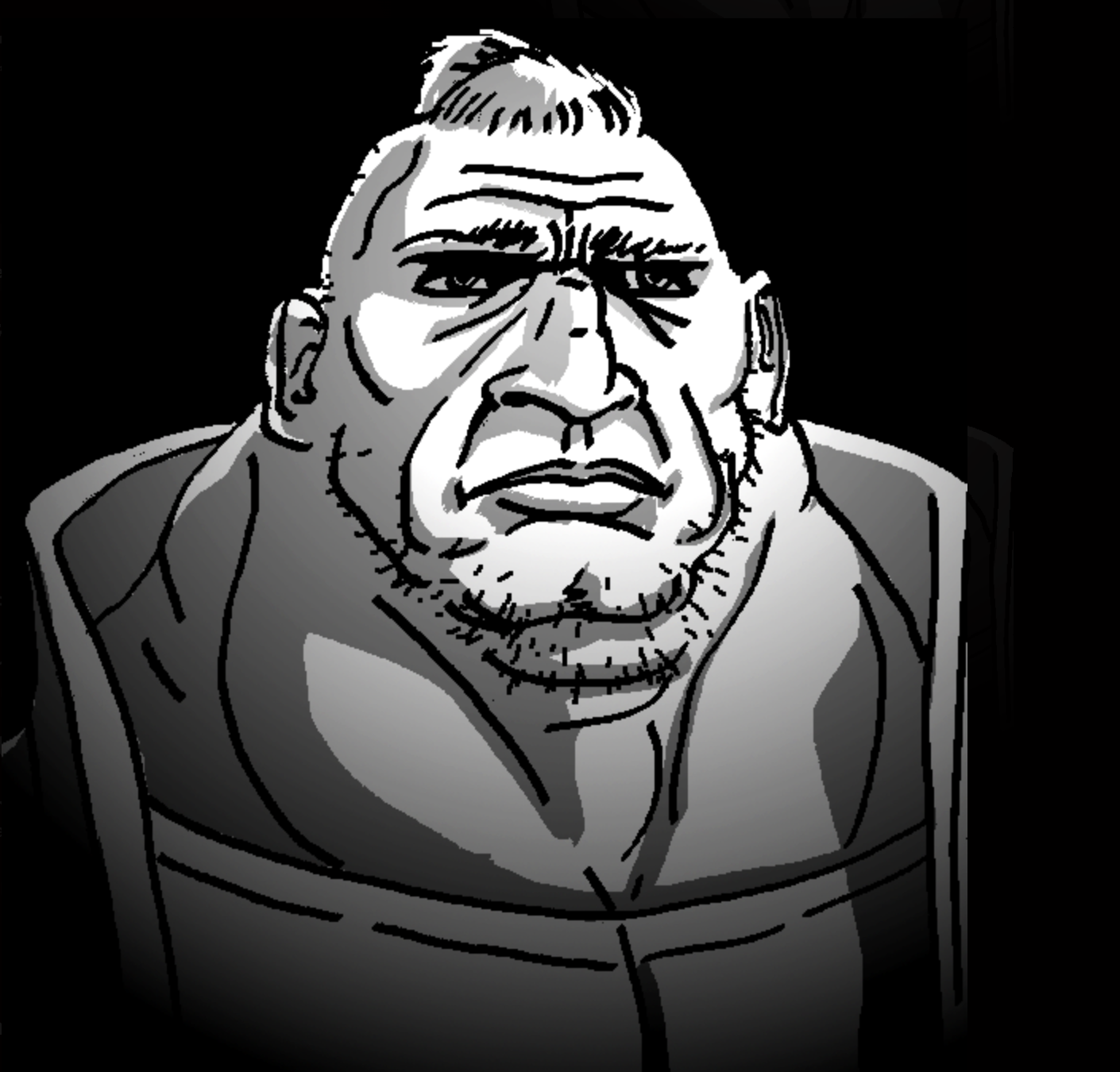
The Yahow are immediately recognizable for their immense, wide necks as well as their narrow upper craniums, a result of a form of microcephaly.
As a control mechanism, the Yahow have a deep-seeded and heightened fear of fire. This fear is akin to the danger sense of baseline humans, often described as a sensation of being watched and likely an early evolutionary adaptation to prehistoric fauna that hunted human beings, such as the [REDACTED] although such speculation at this point is impossible to determine, and the Arkillects are silent on this topic, much to the chagrin of those who question them.
The Yahow are not adapted to fear a naked flame because of some evolutionary trauma. Instead, their neurological response is a trigger which activates a myotonia congenita event. Simply put, a Yahow seizes up when fire is in their proximity. This reaction notably does not extend to the muzzle flashes of ballistic weapons or sparks from welding equipment, and neither are the Yahow frozen in the rush of an explosion. Instead, their trigger is the fire produced by a single struck match, denoting the cunning design of their creators.
In previous societies, fire was used as a simple means of controlling this population bred to be considerably stronger than their handlers. Now, in the Hegemon, such acts are not tolerated and considered criminal by the Lex, although abuse is widespread in the Frontier sectors and nations like the Suns Confederated, where Yahow are prohibited first-class citizenship.
Other limitations are present, such as their inability to speak anything other than the language Laga-Lang. They can understand other languages but the linguistic regions of their brain are deliberately stunted. Yahow have no dialects, accents, or any detectable deviance from Laga-Lang despite their widespread diaspora.
Laga-Lang presents as a near-constant stream of consonants lacking any consistent grammatical structure, sounding like incoherent mumbling. None but the Yahow can speak Laga-Lang, but it can be poorly reproduced, albeit artificially, and marginally understood by those that spend time in close proximity to them. Those few who study the Yahow believe that Laga-lang is actually a form of Ur-lang, or one of the Edenic languages, and that there are memetic undertones threaded in the rolling, undecipherable sounds that the Yahow make which speak to the human mind on a subconscious level. Interestingly, many Directorate and mercenary outfits often employ Yahow as codespeakers when communications must be confounded deliberately.
Regardless, it is ignored and deemed gibberish by the vast majority of peoples who interact with the Yahow. Yahow that work regularly with humans or other numans often rely on Yinntosh maethish translators they wear or install close to their mouths.
Some genealogists believe the Yahow were not created as a single lineage. Their classification as Mules suggests that they may be the descendants of several engineered populations that intermingled during an ancient migration. If true, the modern Yahow represents the stable remainder of multiple abandoned labor strains, rather than one carefully-planned species.
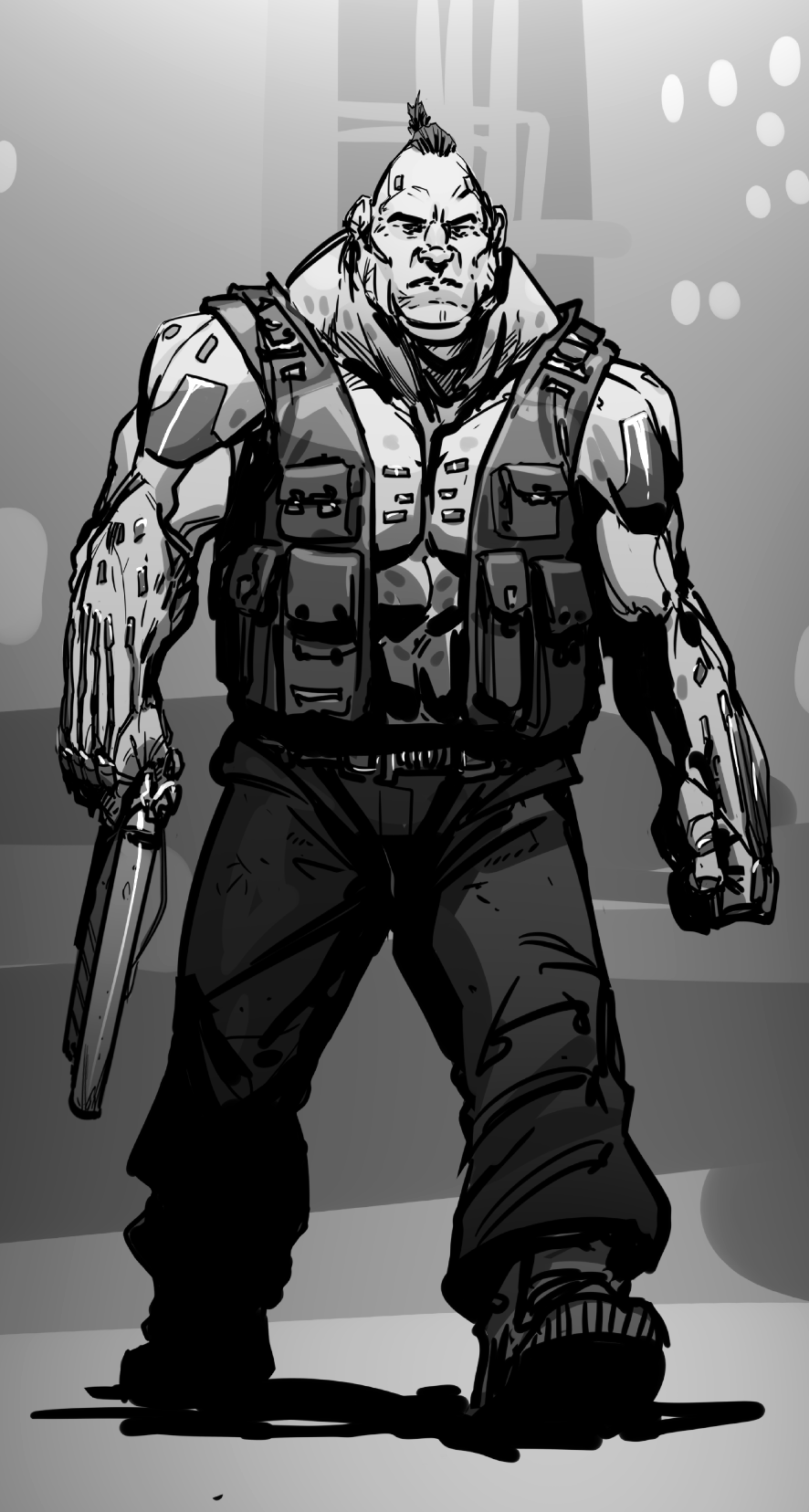
Yahow are fully recognized as part of New Mankind and hold positions throughout Civil Space, typically as construction workers or mechanics. A smaller number have become Tributaries and mercenaries, but often must afford augmentation to suppress their various tailored reactions designed for subservience.
Physiology
A mature Yahow stands approximately seven feet tall, with no major differentiation between their sexes, of which there are two. They possess a massive, broad neck, hulking shoulders, and a narrow skull. Their arms are long and trunklike, terminating in broad hands which lack fingernails.
Their heads are comparatively small. Yahow possess low cranial profiles, heavy brows, recessed foreheads, long noses, and pronounced jaws. Variation exists, similar to most human species, depending on the light intensity and gravitational extremes of their home planets. Yahow are technically a ‘Grounder’ subspecies, but are notably capable of living in weightless space with little issue or discomfort.
Loose tissue beneath the chin forms a thick pendulous throat that becomes more conspicuous with age. Hair growth is concentrated along the forearms, upper back, and the reduced crown of the head. Many Yahow gather their cranial hair into a practical topknot. Facial hair is rarer, with minimal whiskers or eyebrows.
Yahow are resistant to blunt trauma, and capable of sustained exertion under loads that would permanently injure an unmodified human. Their reinforced musculature comes with a significant metabolic cost. Yahow require large quantities of food and can become lethargic or dangerously irritable when kept on inadequate rations. As such, they are often hired only after the establishment of a colony or on larger space stations to reduce the investment in consumables.
Although commonly described as unintelligent, Yahow cognition can be more accurately characterized as narrow. They struggle with abstraction and unfamiliar technology, as well instructions requiring several conditional steps in order to properly execute a task. Once they acquire information, they never forget it, making them ideal machinists, vastly preferred over ergoids, which the Yahow typically hold a deep hatred towards.
Discovery and Admission
Yahow did not reenter the Cradleworlds with the Third Exodus, but were found on various planets in small communities, trapped in the technological decline their former masters had left them in. Their isolation in mining facilities served as the ideal conditions for surviving the abandonment of the Cradleworlds during the Second Exodus.
Solaphine, closest planet to the star Kantaur Majora, was found to be hollow. Discovered within was a contained ecosystem and the remains of a city which served as the only entrance into the inner world. While no members of Old Humanity remained, the Yahow still roamed this great interior. When the Kantaur nobles of the Dominion arrived, they rebuilt Arawakan City and enslaved the Yahow, shipping many throughout their nation. The Yahow proved to be an integral aspect of the Kantauri obsession with megastructures.
The second most notable society of Yahow were found on Taprava in the Harvat system, a part of the Bhos cluster. The tenacious nations of that region had several pockets of survivors who had remained during the Second Exodus, and Taprava was one such world where the Yahow had prospered. Interestingly, there are oral tales repeated by the Yahow that they arrived on vast ships from a people called the Relinchar. The Yahow of Taprava had accumulated vaults’ worth of diamonds that they had mined for generations. The Harvat, a warrior culture adverse to human deviance, attacked the Yahow and plundered their wealth. These Taprava Yahow were scattered throughout the region, and many of them found the Uthmani League or gradually carved out homes for themselves in small pockets throughout Known Space.
By the time of the Hegemon, assessors eagerly embraced Yahow as examples of a numan species that fully embraced Avarice. The Yahow love for precious stones, diamonds, and jewels was living proof of how the evolutionary drive of humanity, no matter how diverted by science, could shine through and reveal Stellarization’s truth and the wisdom of Dumno-Ualos. The Yahow were admitted into the Hegemon almost immediately, and it was members of their species, influenced to become freedom fighters, who were the muscle behind the many initial engagements of the Great Revolution that would topple the Kantauri Dominion.
Diamond cubics remain a form of wealth, status, and emotional security among Yahow communities. Individual stones are carried, displayed as jewelry, traded, and occasionally incorporated into tools or personal ornaments. Corpo entities enjoy Yahow as they are relatively cheap and can be paid in diamonds, which are certainly not the rarest commodity in the Galaxy.
Status in the CorpoSoci
Yahow are now commonplace throughout Hegemonic space. They are found in mines, foundries, shipyards, manufactories, but also in the Directorate where they fall under the ‘Mule’ classification of numans. Their strength allows them to work where powered harnesses would be too expensive, and serve as the obvious, preferred alternative to ergoids.
Their legal position varies considerably. Some are registered as Consumers and possess the Right of Choice. Others often remain bound in predatory indentured contracts, written in languages they cannot understand.
Yahow communities are often small, a few hundred individuals that sometimes pair to produce children but often drift apart. The Yahow desire for precious stones will always force them to seek out and fulfill their Avarice.
Amongst the Directorate
Despite their visible strength and size which would make them excellent fighters, Yahow are rarely accepted into Directorate service. The lack of creative reasoning makes for a poor soldier, and since traditional wealth is not the driving need for the Yahow, Directorate incentives for contracted soldiers hold limited appeal. Their fear of fire also makes them unreliable for obvious reasons.
That said, there have been notable Yahow Tributaries who, with surgeries and organoid implantation, have been able to earn rank amongst the enlisted positions. Instead, Yahow predominantly operate in the various motor pools where their abilities as techanics are second to none.
Mercenary companies, Frontier militias and Unionist movements have all employed Yahow as shock troops, porters and various support positions. Once familiarized with a weapon, they can become extremely dangerous combatants. Their loyalty is generally personal rather than ideological, requiring attachment to trusted handlers.
Yahow Communities
Away from direct corporate supervision, Yahow gather in extended familial groups organized around shared work, food, and collections of precious stones. Their communities are physically demonstrative and often noisy. Yahow enjoy a party and singing in their own indecipherable tongue. Traditional oral retellings and extended plays are commonplace even among small groups.
The long memories of Yahow are a comfort to them, and they do not miss their own the way other human demographics might miss their loved ones. This seeming absence of longing can appear to outsiders as a solitary lifestyle.
Assessment
The Yahow embody one of the central contradictions of the Fruitful Tree that traces the evolution of humanity as a whole. Hegemon educational modules present their admission as an example of CorpoSoci’s ability to find a place for every useful form of humanity, despite preconceptions. This is the essence of Dumno-Ualos’ foundational thesis on the species of New Mankind. Biology alone cannot be representative of what it means to be apart of the same race; it must incorporate the concepts of the mind, the Self, and the philosophy of what inspired the hand to work the soil and the eyes to look upon the stars and defy the sky.
Whatever the Yahow were originally made to be or who those creators were, they have survived and prospered in the Hegemon of a Thousand Empires, and through the Second Exodus, countless resettlements, enslavement, and more.
The Yahow persevere.